Albania's Student Protests Deepen as Prime Minister Blames 'Antifa' for Unrest
After nearly five months of demonstrations against corruption, Prime Minister Edi Rama has pointed to antifa as the force behind the youth-led movement, a claim experts say lacks evidence.
By Global Business Media Hub Staff ·
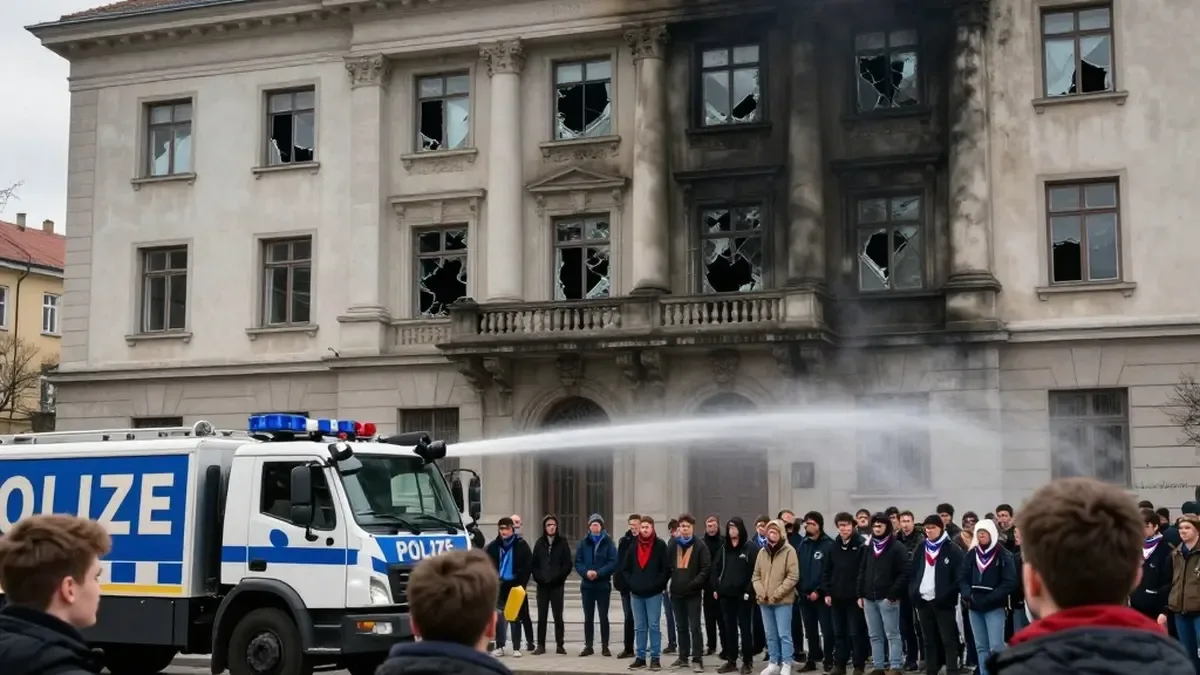
Damage from the October 13 protests was still plain to see this week when students and faculty from the University of Tirana gathered outside the Education Ministry in Albania's capital on Tuesday. Broken windows had not been replaced, and the walls remained blackened by fires set during the unrest.
The demonstrations have continued for almost five months. They began as peaceful protests after plans became public for Jared Kushner, a son-in-law of US President Donald Trump, and associates to build a luxury hotel complex inside a nature reserve. Since then the movement has widened and sharpened. University and high school students now face police nearly every day, and the most intense confrontations so far took place last week.
Protesters are denouncing corruption, poorly run universities and the growing cost of education. They are also demanding the resignation of Prime Minister Edi Rama, who has held office since 2013.
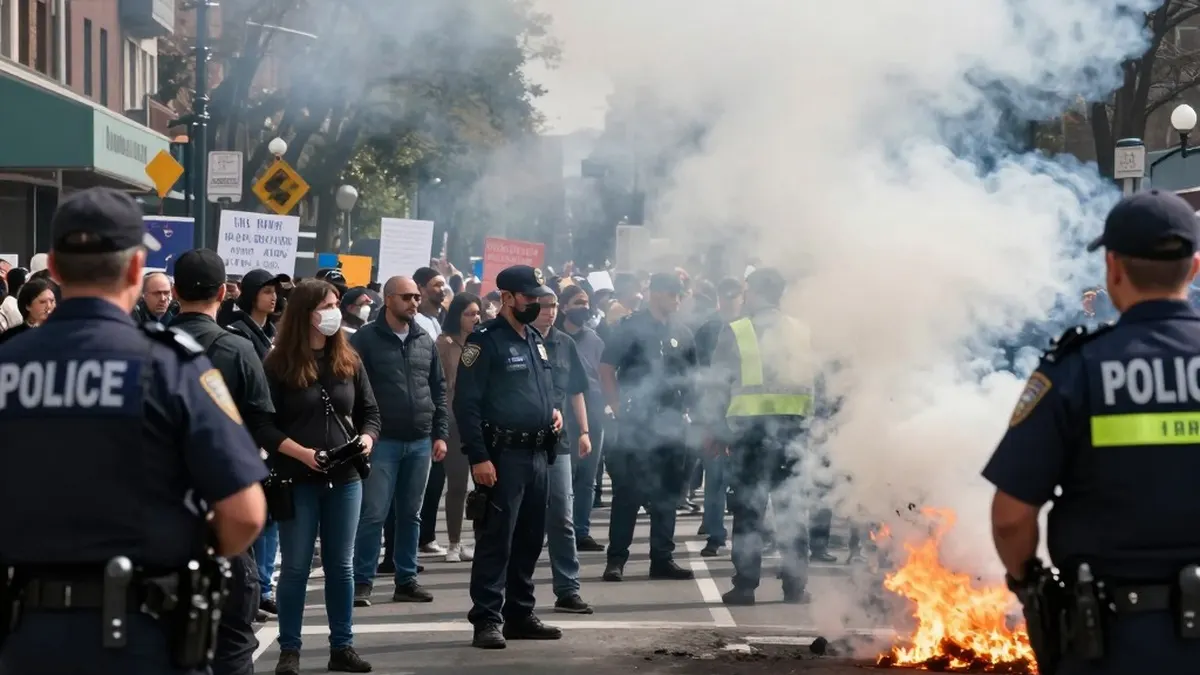
A woman who asked to be called Sara, and who covered her face out of fear of repercussions, told DW that protesters coordinate by text message. She ended the interview early when some demonstrators started throwing stones at the ministry. Police pushed protesters and reporters back and used water cannons to break up the crowd.
Besmir Semanaj, a prominent Albanian cybersecurity advocate, said young people organize where they spend their daily lives. He named Instagram, WhatsApp groups for year cohorts, departments and dormitories, Telegram channels for announcements, and TikTok for videos, with Signal favored by the most security-conscious. The structure has no individual leaders and no central command, he said, which is why the government struggles to understand and control it. Telegram, he added, can reach tens of thousands of people within seconds and is harder to monitor externally.
Rama has described the uprising as a "hybrid war." He has said protesters believe they can improve Albania through TikTok, and that although not all are terrorists, they are "hostages to a certain mindset." Over the months he has blamed the governments of Greece, Russia and Iran for stirring dissent. Most recently he pointed to antifa, saying young people had been radicalized by a "dark force" that the US president has designated a terrorist organization.
Redion Qirjazi, a security affairs researcher, told DW that such a serious accusation requires equally compelling evidence, and that none has been presented showing an organized antifa structure in Albania or any role in coordinating the protests. He noted that antifa is not a unified international organization but an umbrella term for anti-fascist movements and groups. Sara rejected the terrorist label. Some groups are willing to use violence, she said, but she walks away from it.
Arlind Qori, chairman of the Together Movement, a social-democratic opposition party with one parliamentary seat, said young people are driven by dissatisfaction with poverty, parental emigration, a declining education system and poor prospects after graduation. Their central demand is Rama's resignation, he said, not a socialist revolution. He accused the prime minister of answering with police violence and arrogance.
Qirjazi suggested the allegations of foreign interference could be a strategy: linking protesters to extremism may shift attention from the real causes toward national security, delegitimize demonstrators, weaken public support and justify a tougher crackdown. Semanaj called this a common pattern, in which protests are portrayed as violence, young people as manipulated, and concerns about universities, tuition, corruption and prospects drop off the news agenda.
Source: Deutsche Welle