Energy Mandates: Trump pushes AI giants to share power with local grids
The administration is proposing that hyperscalers return excess electricity to neighboring towns to offset rising utility bills and ease local tensions.
By Ahmed Mansour ·
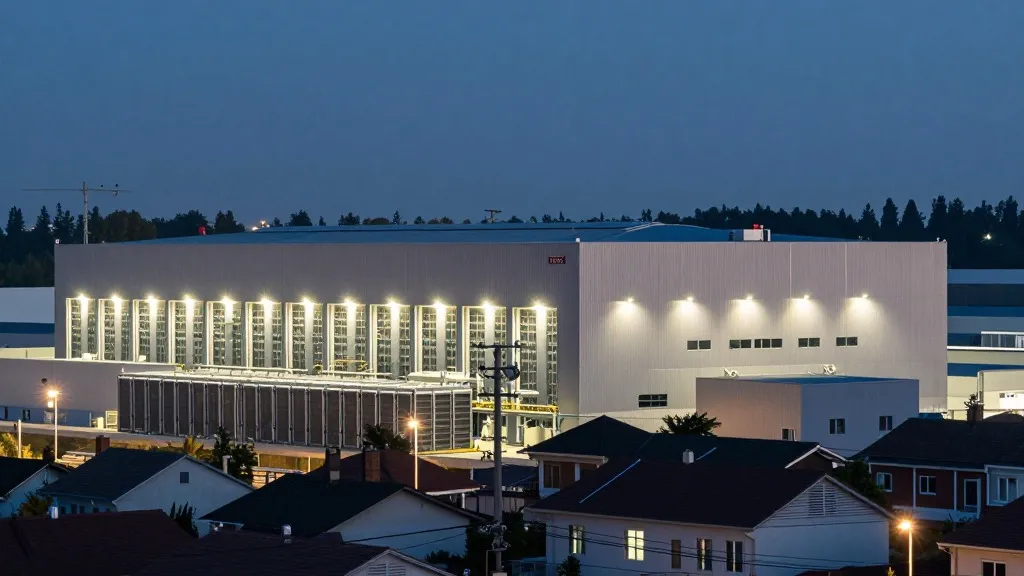
The scale of the energy demand from artificial intelligence data centers is currently so massive that it is reshaping the economic landscape of small towns across the country. President Donald Trump has moved to address the friction between these massive facilities and their neighbors by calling for a new financial arrangement. In a recent post on Truth Social, he outlined a plan where data center builders and AI hyperscalers would be required to pay a dividend to the communities they impact. The goal is to mitigate the price hikes in local energy costs, or potentially even reduce them, making the presence of these centers more acceptable to residents who have often opposed them.
The core of this proposal is that these facilities would not only be mandated to generate their own electricity, as previously stated by the administration, but also to give or sell any excess energy back to the local community. This approach aims to turn a liability into an asset for nearby towns. By ensuring that the power generated by these centers does not just sit idle or get sold to distant markets, the administration hopes to create a direct economic benefit for the people living in the vicinity.
Local opposition to AI data centers has been growing for several reasons. Residents frequently cite rising electricity bills, noise pollution, water shortages, and air pollution as primary concerns. Deforestation is also a point of contention in areas where land is being cleared for these projects. These issues have made the facilities a source of tension, with many small communities feeling that the environmental and economic burdens are being disproportionately placed on their shoulders while the profits are reaped by large tech companies.
The Trump Administration is keen to stay ahead of China in the ongoing AI arms race. To achieve this, they need to win back some favor from local populations by ensuring that data centers pay something back to the affected communities. The specific mechanism of this dividend is not yet fully defined, but given the focus on electricity in the President's post, it is likely to take the form of partially paying for rising electricity costs. This would directly alleviate a pain point that affects many homes within range of these power-hungry facilities.
There is also a recently passed act that orders data centers to shoulder the cost of grid upgrades. This is designed to prevent those costs from being passed on to local communities through taxes. The combination of this act and the proposed energy dividend suggests a broader strategy to make the infrastructure surrounding these centers more financially sustainable for local governments and residents.
In his post, the President argued that data centers, which were highly unpopular in certain areas, have become extremely popular once a financial deal was struck. He emphasized the need to "MAKE DEALS, and get them built!!!" to ensure the continued expansion of AI infrastructure. This sentiment reflects the administration's desire to accelerate construction while smoothing over local objections through economic incentives.
However, significant questions remain about whether these dividends will be enough to win over skeptical communities. The economic aspect is only one facet of the problem. Enormous water consumption, ecological damage, and pollution are still major challenges that make AI data centers a hard sell in many locations. A check in the mail may not be sufficient to offset the long-term environmental impacts that residents are concerned about.
Furthermore, the term "dividend" raises interesting questions about the financial reality of these projects. Companies typically pay dividends only when they are profitable. New data center builds are likely to be in a period of recouping construction costs for some time, meaning they may not be generating the surplus needed for such payments in the short term. Additionally, the power generation currently being installed by many of these centers relies heavily on gas-powered generators, which can be noisy and inefficient. For residents living very close to these facilities, the immediate benefit of cheaper electricity might be overshadowed by the local noise and air quality issues.
There is also a concern that without strict requirements, companies may simply go through the motions to satisfy the mandate without providing substantial benefits. Some observers suggest that the concept of a "dividend" may be more of a gesture than a concrete financial outcome, especially if operating costs and asset depreciation consume the majority of the revenue. As the administration pushes for these deals to be finalized, the practical implementation of this energy-sharing model will be the true test of its effectiveness in bridging the gap between tech giants and the communities they inhabit.
Source: Tom's Hardware