NASA Overhauls Lunar Return Strategy, Pivots to High-Earth Orbit Docking
The space agency has restructured its Artemis IV architecture to simplify vehicle integration, aiming to secure a 2028 lunar landing while navigating complex commercial partnerships.
By Ji-eun Choi ·
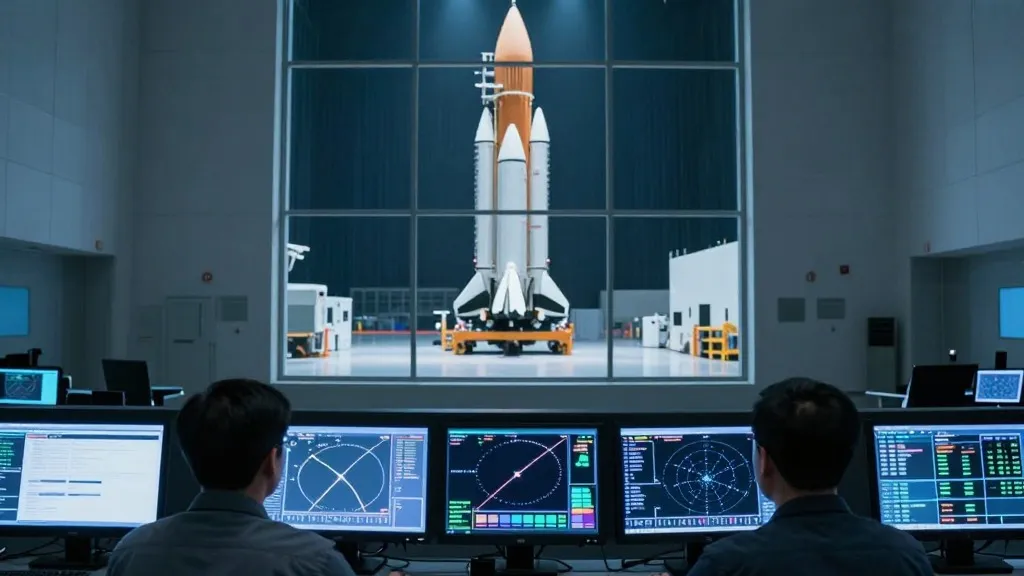
NASA has officially restructured the architectural backbone of its lunar return program, resolving a persistent technical bottleneck that had clouded the timeline for crewed missions to the Moon.
In a detailed briefing held on Friday, agency officials outlined a revised plan that targets a crewed lunar surface landing as early as 2028. While some components of this strategy had previously leaked to industry observers, this marked the first public confirmation of significant structural changes to how spacecraft will interact in space. The shift represents a notable departure from earlier concepts, driven by the need to streamline operations for commercial partners.
The most consequential change involves SpaceX’s Starship vehicle. Under the new framework, the Orion spacecraft will no longer need to perform a complex docking maneuver in a near-rectilinear halo orbit around the Moon. Instead, Orion is scheduled to dock with the Starship lunar lander in high-Earth orbit. This adjustment addresses a major engineering challenge identified by SpaceX engineers during meetings with NASA in early 2026, where the previous orbital requirement was cited as energy-intensive and technically difficult. The cancellation of the Lunar Gateway station earlier this year effectively removed the logistical constraints that made the halo orbit docking necessary.
The plan also introduces distinct variations for Blue Origin’s participation. The architecture for the Blue Moon lander involves four separate launches of the New Glenn rocket. Notably, this pathway eliminates the need for spacecraft-to-spacecraft refueling, a step that adds significant complexity to mission planning. Furthermore, the Blue Origin scenario allows for the Blue Moon lander to rendezvous with Orion in low-Lunar orbit, offering a different operational profile than the SpaceX route.
Despite the architectural shifts, the high-level timeline remains largely intact. NASA officials stated they continue to anticipate the launch of the Artemis III mission by summer 2027. This upcoming flight will serve as a critical demonstration, involving docking maneuvers with both the Blue Moon and Starship vehicles near Earth. Following this, the agency is still tracking toward a 2028 launch for Artemis IV, the mission that would finally place astronauts on the lunar surface.
NASA Administrator Jared Isaacman emphasized the agency’s confidence in the revised roadmap during the presentation. "This is an achievable path we are on right now," Isaacman said. "We have the mandate, we have the resources, and the support from our stakeholders to be able to execute, and that’s what we intend to do." His comments suggest a leadership team focused on practical execution rather than theoretical expansion.
The decision to revisit these elements reflects a broader effort to align agency goals with the capabilities of its commercial partners. By removing the halo orbit requirement, NASA has addressed a specific pain point for SpaceX, potentially accelerating the readiness of the Starship lander. However, the success of these dates ultimately depends on the ability of both SpaceX and Blue Origin to meet their respective development milestones without further slippage.
As the agency moves forward, the focus now shifts from planning to execution. The coming months will test whether the simplified architecture holds up under the scrutiny of actual engineering and testing phases. For now, the path to 2028 appears clearer, but the margin for error remains slim.
Source: Ars Technica