Tesla's Robot Line Faces Hurdles Before Mass Output
Tesla is manufacturing Optimus robots at scale while simultaneously developing the artificial intelligence required for them to operate autonomously.
By Aiko Yamamoto ·
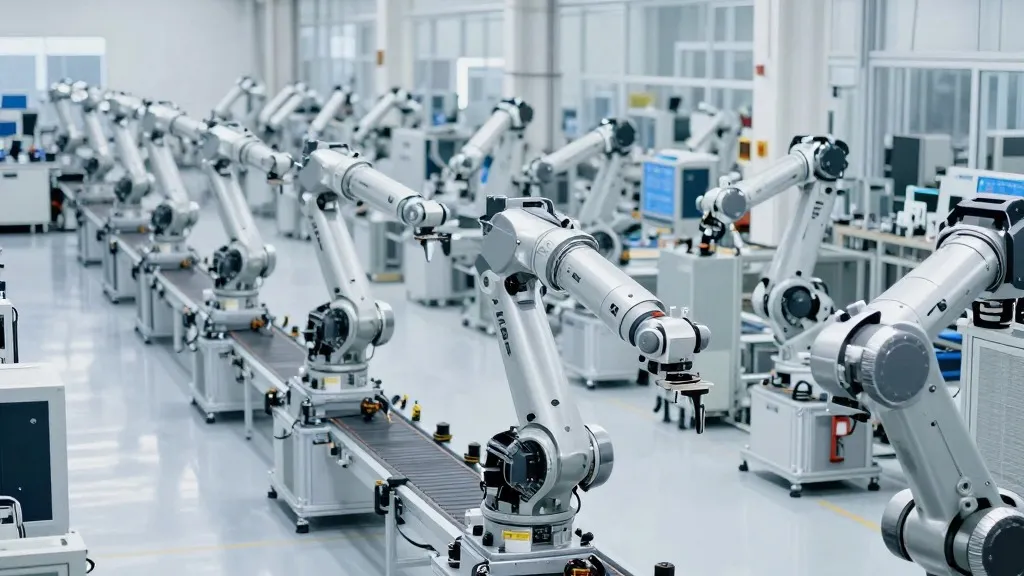
Tesla has begun assembling Optimus units on a high-volume line within its Fremont factory, a move the company says validates its manufacturing approach for a commercial product. However, the company must still refine the robot's capabilities before it can fulfill promises of widespread deployment in industrial settings.
The Fremont facility was retooled to accommodate this new production stream. The space previously assembled Model S and Model X vehicles, but Tesla cleared that line in 46 days earlier this year to install equipment capable of producing up to one million robots annually. On a recent earnings call, Elon Musk noted that most of the equipment required for this capacity is already in place at Fremont.
Output is projected to rise significantly, with the company aiming for a run rate of approximately 20,000 units per week. Musk described the production ramp as a classic S curve, explaining that the initial phase involves a shallow slope before rapid acceleration. The team is currently focused on refining the robot's AI, electromechanical design, and service life to ensure reliability.
A critical challenge remains how to train these machines. While Tesla's fleet of millions of vehicles provides a constant stream of driving data to improve autonomous features, Optimus does not have such a network. To address this, the company plans to launch an 'Optimus Academy' where 10,000 to 20,000 robots will practice various tasks to generate the data necessary for training the next version of the model.
Every unit manufactured at the Fremont line will serve as a source for this training data. Musk emphasized that Tesla will not rely on preprogrammed routines, stating that a new video demonstrating an Optimus performing tasks driven by AI rather than scripted motions is expected within one or two months.
The supply chain is also expanding to support production. In September, Tesla certified Tuopu, Joyson, and Sanhua as partners for mass-producing Optimus components. Furthermore, a significantly larger facility for the robot is under construction at Giga Texas, where drone footage shows the steel frame nearing completion.
Musk has set a long-term target for the Texas plant at 10 million robots a year. Executives stated that production costs for the unit are trending toward the expected manufacturing cost of the Cybercab, indicating the robot is being engineered for volume production from the start.
The hands remain the most difficult part of the design to perfect, and much of the current engineering effort is focused there. Tesla plans to integrate its AI5 chip into the robot next year, with deliveries to outside companies for dangerous or repetitive jobs scheduled to begin by the end of 2027.
Source: Teslarati