How one academic is teaching students to question AI instead of just using it
A new approach at Hebrew University Business School emphasizes critical thinking and human accountability over full automation in data science courses.
By Xiaoyu Wang ·
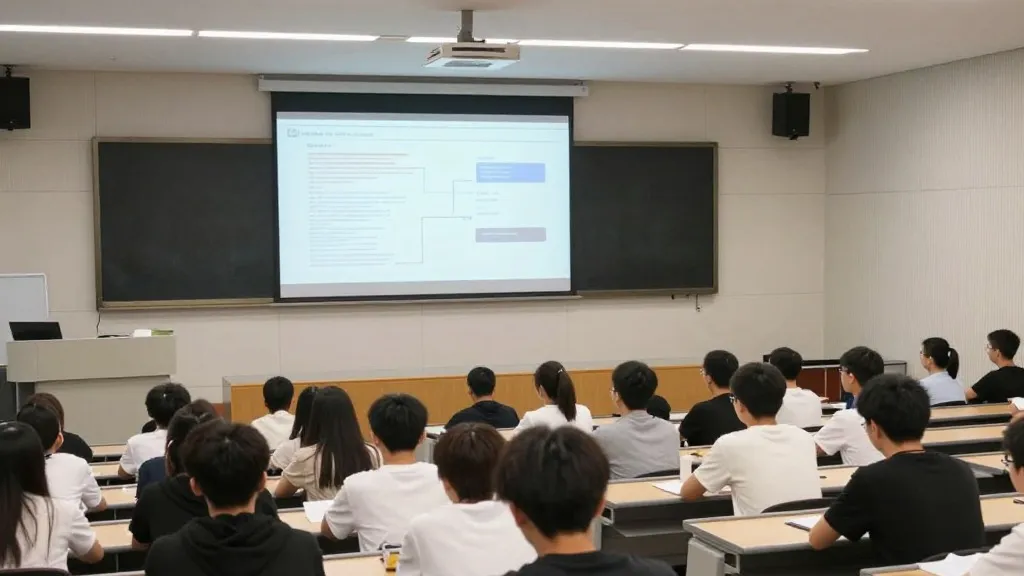
The integration of artificial intelligence into higher education has sparked a fundamental debate about the future of human expertise. While many institutions struggle to define how students should engage with these powerful tools, Prof. Claudia V. Goldman of the Hebrew University Business School has adopted a specific methodology. Her approach prioritizes critical analysis and real-world problem solving over passive consumption of AI-generated content. This strategy aims to ensure that graduates are not only technically proficient but also ethically grounded in their use of emerging technologies.
Goldman, who has served as an associate professor in the Data Science Department since July 2024, believes the primary objective of AI is to address tangible issues. Her academic journey reflects a deep commitment to computer science and mathematics. Born in Argentina, she moved to Israel in 1984 at the age of 16. She completed her secondary education at Mae Boyer High School in Jerusalem in 1986 and subsequently served in the military. She then pursued three degrees at Hebrew University, earning a BSc in 1991, an MSc in 1993, and a PhD in 1999 under the supervision of the distinguished scholar Prof. Jeff Rosenschein.
Before joining the business school, Goldman built a substantial career in both academia and industry. Between 1999 and 2005, she held research positions at Bar-Ilan University, the University of Massachusetts Amherst, and the University of Haifa. She later transitioned to the private sector, leading a team at Samsung Telecom Research in Herzliya for three years. This was followed by a 15-year tenure as a research scientist at General Motors' R&D organization in the same city. Her work has resulted in 24 patents and more than 50 academic publications, demonstrating a strong bridge between theoretical research and practical application.
In her current teaching role, Goldman implements strict guidelines for AI usage. She explicitly informs students when and why they may utilize AI tools, requiring them to credit the technology and explain their process. She does not accept answers that are fully generated by AI, noting that students are aware she can detect such work. Instead, she encourages students to use AI as a brainstorming partner while maintaining a critical stance. This includes verifying whether cited sources actually exist and checking for potential biases in the information provided.
To assess student understanding, Goldman relies on a combination of classwork, presentations, and peer-organized activities. These in-person evaluations allow her to gauge comprehension beyond written submissions. The curriculum also extends to human responsibility and values, prompting students to consider what kind of researcher, professional, and person they wish to become. This holistic approach ensures that technical skills are balanced with ethical reasoning and social awareness.
When discussing broader industry trends, such as Bill Gates's concept of reserving certain jobs for humans, Goldman argues against a simple binary view. She suggests that the focus should be on understanding the specific benefits AI offers in various roles and contexts. The key, she contends, is identifying the critical skills needed to strengthen human performance alongside these tools. The Business School supports this view through courses like AI for Social Good, Responsible AI, and When AI Meets Humans and Society. Additionally, the university offers a Free Listener Program that allows senior citizens to audit these courses as the fall semester begins.
Goldman's professional background includes significant work in automotive technology. At General Motors, she focused on introducing learning agents into the vehicle user experience. The goal was to help drivers remain focused on the road while better understanding autonomous driving functions. This experience informs her current teaching by providing concrete examples of how AI can enhance human decision-making in high-stakes environments.
Her personal history also shapes her perspective. Goldman’s grandparents emigrated to Argentina before the Holocaust, and her parents were born there. She attended a Jewish school in Buenos Aires through seventh grade, studying in Yiddish, Hebrew, and Spanish. In 1983, she told her father that she could only see herself growing up in Israel. The family made aliyah six months later. She met her husband, Prof. Roy Shenhar, a chemistry professor at Hebrew University, on campus stairs in 1995. They followed a local custom by treating each other to ice cream after meeting unexpectedly for the third time, and they married in 1999.
Source: The Jerusalem Post
More Business · World news · Business Watchdog · Report a business